
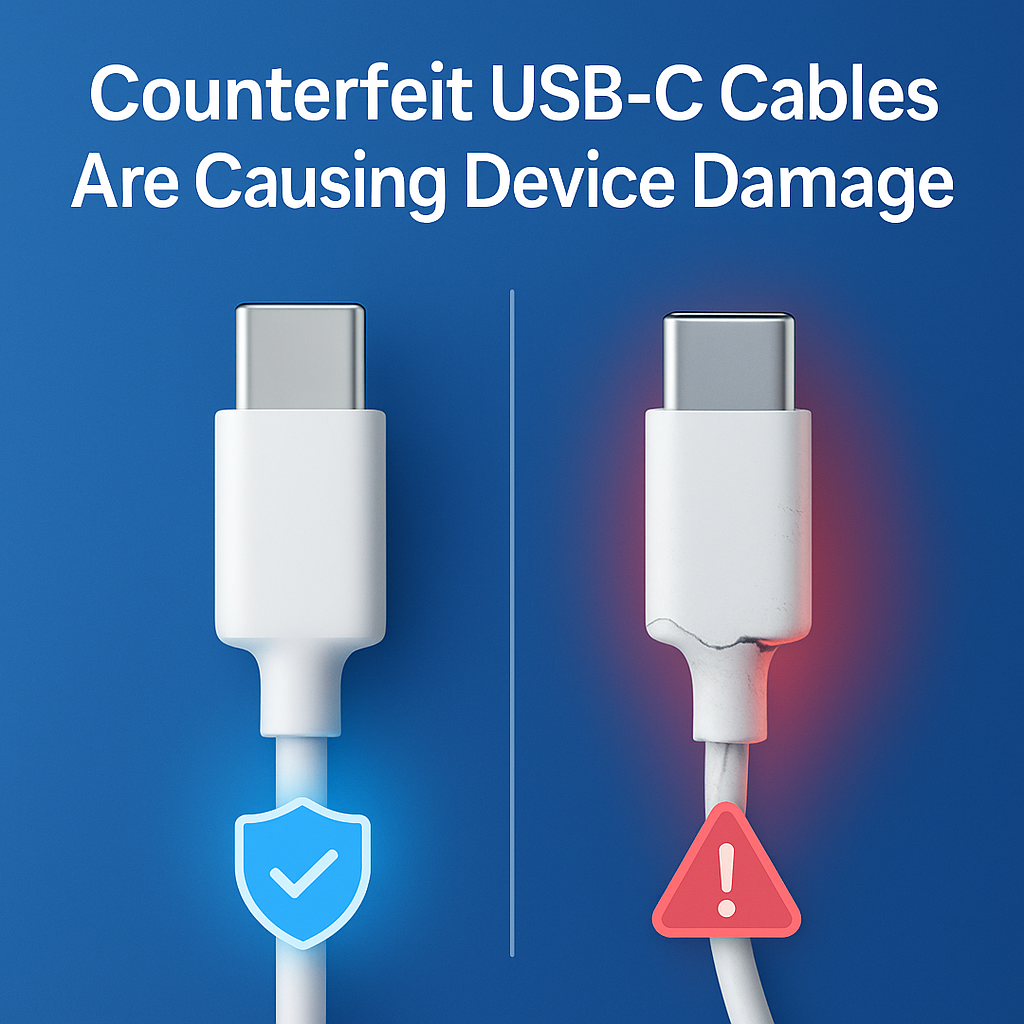
Several independent research institutes have reported a noticeable increase in smartphone and tablet failures linked to counterfeit USB-C cables circulating in multiple regions. Test labs found that many unbranded or imitation cables fail basic safety requirements related to voltage stability, temperature control, and connector integrity.
The findings raise new concerns for both consumers and retailers as fast charging becomes a standard feature in modern devices and high-wattage charging spreads through the market.
1. What labs found inside counterfeit USB-C cables
According to recent test data, the most common issues include unstable 5 V and 9 V output, incorrect resistance values in identification circuits, and poor shielding that exposes devices to sudden current spikes. In controlled stress tests, several counterfeit cables overheated within minutes when paired with standard USB-C fast chargers.
Engineers also discovered that some cables advertised as fast charging capable simply route power through undersized conductors, creating significant heat buildup when higher wattages are used. This heat can accelerate battery swelling, degrade cell capacity, and in some cases damage power-management components on the motherboard.
2. Why the risks grow with high-wattage charging
Counterfeit USB-C cables have existed for years, but the risk has intensified as charging speeds increase. When chargers deliver between 33 W and 100 W, low-quality cables are more likely to fail, create hotspots, or cause unstable charging behavior. Modern phone batteries are designed to handle fast charging, but only when the full power path, including the cable, matches safety specifications.
Researchers warn that even if a counterfeit cable appears to work at first, long-term use can quietly shorten battery lifespan and increase the chance of sudden shutdowns or unexpected restarts.
3. How regulators and certification bodies are responding
Regulatory agencies in multiple regions have urged importers and retailers to tighten incoming inspections for USB-C cables, especially low-cost bulk shipments with no clear manufacturer identity.
Certification organizations are reminding brands and distributors that cables marketed as fast charging accessories should comply with USB-IF related guidelines and pass basic thermal and stability tests.
Some e-commerce platforms have started to remove listings that misuse well-known certification logos or advertise unrealistic fast charging performance at extremely low prices.
4. Practical guidance for consumers and retailers
Choose USB-C cables from identifiable brands and avoid items with no clear manufacturer or model information.
Be cautious of ultra-low prices for so-called fast charging cables, especially when certification labels are missing or obviously misprinted.
Retailers are encouraged to partner with suppliers that can provide consistent test reports and clear documentation for charging accessories.
Conclusion
The surge in counterfeit USB-C cables is a growing challenge in an era of widespread fast charging and high-capacity phone batteries. While many of these accessories appear harmless at first glance, long-term use can quietly damage battery health and essential power-management components.
For both consumers and distributors, treating cables as critical parts of the charging system, rather than disposable add-ons, is essential for safety and device longevity.
Looking for reliable USB-C charging cables, power banks, and phone batteries with stable performance and safe design