
Search This Supplers Products:power bankmobile phone batterymobile Chargermobile Cable
-
 ANSI/UL 62368-1:2025 Fourth Edition Published, Updating Safety Expectations for Consumer Electronics
UL published ANSI/UL 62368-1:2025 (Fourth Edition), refreshing the North American safety baseline for AV/ICT products. The update mainly affects certification planning, lab expectations, and documentation alignment across consumer electronics supply chains.
time2026/01/04
-
Health Canada opened a pre-consultation (Dec 2, 2025 to Feb 14, 2026) on introducing mandatory safety requirements for lithium-ion batteries and battery-containing consumer products under CCPSA. The notice cites incident and recall data and outlines possible routes such as third-party certification and referencing standards like CSA 62133-2, UL 1642, and UL 2054.
time2026/01/06
-
USB-IF added USB Power Delivery Specification Revision 3.2 Version 1.1 to its official Document Library, reinforcing the baseline reference used by manufacturers and labs for USB-C PD interoperability and certification. The update highlights growing emphasis on predictable negotiation behavior, multi-port power sharing consistency, and tighter alignment between declared PD versions and real firmware implementation.
time2026/01/12
-
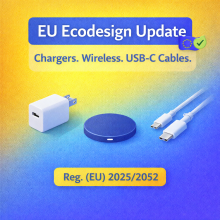
In October 2025, the European Commission adopted Commission Regulation (EU) 2025/2052 under the ecodesign framework, expanding market requirements across external power supplies, wireless chargers, general-use portable battery chargers, and USB Type-C cables, while repealing Regulation (EU) 2019/1782. The move signals a broader push toward measurable energy-efficiency baselines and more predictable charging ecosystem performance.
time2026/01/14
-
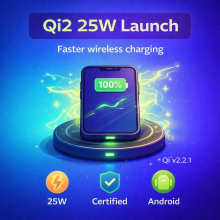
WPC officially launched Qi2 25W based on Qi v2.2.1, pushing wireless charging into a faster tier tied to certification. The market now watches Android adoption speed and whether certified accessories can deliver 25W performance with controlled heat.
time2026/01/19
-
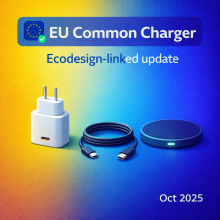
In October 2025, the European Commission advanced the EU Common Charger roadmap by linking it more directly to updated ecodesign rules, signalling that interoperability is being reinforced not only through device ports but also through chargers, wireless charging products, and USB-C cables. The move highlights a shift toward ecosystem-level compliance that aims to reduce fragmentation and make charging performance more predictable.
time2026/01/21
-
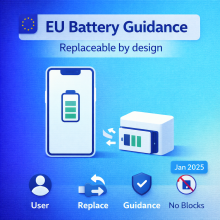
In January 2025, the EU Official Journal published the European Commission’s guidance (C/2025/214) on how to apply Battery Regulation (EU) 2023/1542, Article 11, covering portable battery removability and replaceability. The document clarifies what “end-user replaceable” means in practice, when limited derogations may apply, and emphasizes that software should not create barriers to battery replacement.
time2026/01/26
-
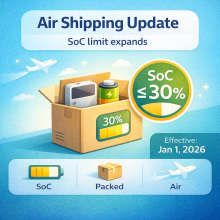
IATA confirms that from January 1, 2026, lithium-ion batteries packed with equipment must be offered for air transport at a State of Charge (SoC) not exceeding 30%. This shifts SoC from a best-practice concept into an operational compliance checkpoint, increasing the likelihood of holds or rework if charge levels are not controlled and verified before tender.
time2026/02/05
-
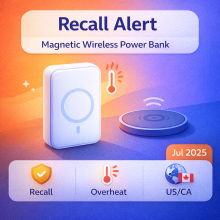
On July 17, 2025, the CPSC and Canada’s recall system issued aligned notices for iStore magnetic wireless power banks after reports of overheating while charging, citing fire and burn hazards. The recall stands out for its clear model/UPC identification and cross-border consistency, reinforcing how quickly magnetic wireless power banks can become a high-scrutiny safety topic in 2025.
time2026/02/04
-
In January 2026, the EU Safety Gate system released multiple recall notifications involving charging accessories sold in Europe, highlighting non-compliance with electrical safety requirements identified through routine market surveillance.
time2026/02/28
-
In February 2026, the EU Safety Gate system issued additional notifications involving portable power banks in the European market, citing potential electrical and thermal safety non-compliance identified through routine market surveillance.
time2026/03/01
-
In February 2026, the EU Safety Gate system issued additional notifications involving portable power banks in the European market, citing potential electrical and thermal safety non-compliance identified through routine market surveillance.
time2026/03/02
-
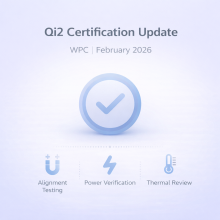
In February 2026, the Wireless Power Consortium announced updates to the Qi2 certification process, refining alignment testing, sustained power verification, and thermal management checks to enhance interoperability and consistency across wireless charging products.
time2026/03/03
-
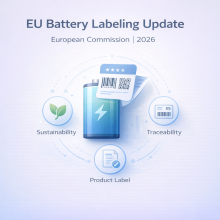
In March 2026, the European Commission released updated guidance on battery sustainability and labeling requirements, clarifying expectations for product identification, traceability, and consistent labeling practices across the EU battery regulatory framework.
time2026/03/04
-
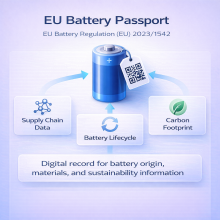
The European Commission released updated guidance in March 2026 for implementing the EU Battery Passport under Regulation (EU) 2023/1542. The system aims to improve battery traceability, lifecycle transparency, and sustainability data across the EU battery supply chain.
time2026/03/05
-
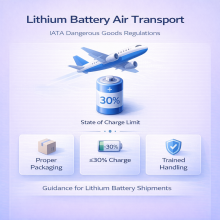
In March 2026, the International Air Transport Association (IATA) released updated guidance on lithium battery air transport. The update emphasizes packaging safety, staff training, and maintaining lithium-ion batteries at a state of charge of 30% or lower to reduce transportation risks.
time2026/03/06
-
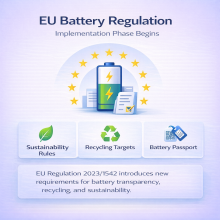
In March 2026, the European Commission confirmed that the EU Battery Regulation (EU 2023/1542) is moving into its implementation phase across member states. The regulation introduces new requirements for battery labeling, recycling, and supply chain transparency, affecting portable batteries used in smartphones, power banks, and consumer electronics.
time2026/03/09
-
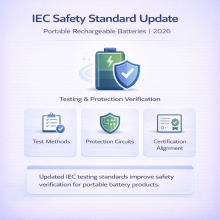
In March 2026, the IEC updated safety testing standards for portable rechargeable batteries, refining test methods, protection circuit verification, and certification alignment. The changes are relevant to smartphones, power banks, wireless accessories, and other portable electronics that rely on lithium battery safety compliance.
time2026/03/10
-
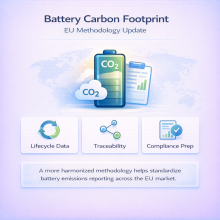
The EU is moving toward more standardized carbon footprint reporting for batteries placed on the European market. The methodology supported by the European Commission’s Joint Research Centre helps create a more consistent way to measure battery-related emissions, which may affect lifecycle analysis, supplier traceability, and future compliance preparation under the EU battery regulatory framework.
time2026/03/12
-
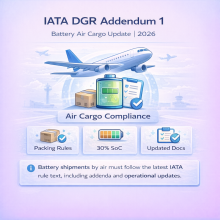
On 1 January 2026, IATA issued Addendum 1 to the 67th Edition of the Dangerous Goods Regulations, reinforcing updated battery air cargo compliance requirements. The addendum matters because lithium battery shipments must follow the latest rule language on packing instructions, documentation, UN 38.3 testing, and the expanded 30% state-of-charge restrictions affecting certain batteries packed with equipment.
time2026/03/13
-
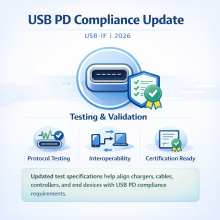
In March 2026, USB-IF released an updated USB Power Delivery Compliance Test Specification for chargers, cables, controllers, and end devices. The update strengthens the testing basis for protocol validation, interoperability, and certification readiness across the USB-C fast-charging ecosystem.
time2026/03/16
-
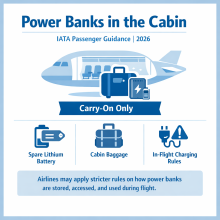
IATA’s 2026 dangerous goods update cycle places stronger emphasis on how passengers carry and use power banks in the cabin. Power banks remain classified as spare lithium batteries and must stay in cabin baggage, while updated guidance also highlights in-flight charging behavior, device accessibility, and airline-level safety controls related to lithium battery risks.
time2026/03/18
-
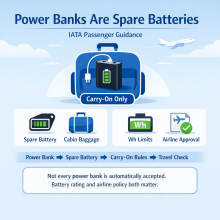
IATA’s revised passenger guidance confirms that power banks are treated as spare lithium batteries, not ordinary electronics. They must be carried in cabin baggage, remain subject to watt-hour limits and possible airline approval rules, and require more careful handling because aviation safety policies distinguish spare batteries from batteries installed in equipment.
time2026/03/19
-
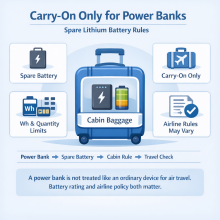
IATA continues to reaffirm that power banks are treated as spare lithium batteries, not ordinary travel electronics. As a result, they must be carried in cabin baggage, remain subject to watt-hour and quantity limits, and may face additional airline-specific restrictions, making battery classification and safe handling important parts of air travel preparation.
time2026/03/20
-
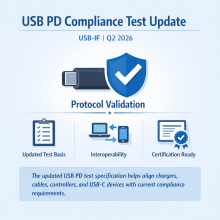
On March 9, 2026, USB-IF published the Q2 2026 USB Power Delivery Compliance Test Specification, updating the official test basis for USB PD products. The update matters for chargers, cables, controllers, and USB-C devices because it strengthens the framework for protocol validation, interoperability, and certification readiness across the fast-charging ecosystem.
time2026/03/23
-
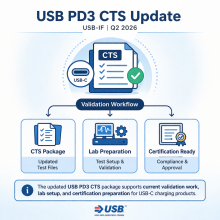
On March 24, 2026, USB-IF updated the USB PD3 CTS Q2 2026 package in its document library as part of its USB Power Delivery compliance materials. This matters because the CTS package supports validation workflow, lab preparation, and certification readiness for USB-C products, while related Q2 2026 USB PD compliance documents show that USB-IF continued refining its compliance infrastructure during March 2026.
time2026/03/25
-
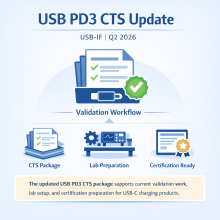
On March 24, 2026, USB-IF updated the USB PD3 CTS Q2 2026 package in its document library as part of its USB Power Delivery compliance materials. The update matters because CTS materials support validation workflow, lab preparation, and certification readiness for USB-C products, while related Q2 2026 USB PD compliance documents show that USB-IF continued refreshing its compliance infrastructure during March 2026.
time2026/03/27
-
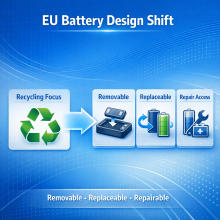
A new EU study highlights a shift in battery policy from recycling toward removability, replaceability, and repair access. The findings suggest that future competitiveness for power banks and charging products may depend not only on performance, but also on structural design and serviceability.
time2026/03/30
-
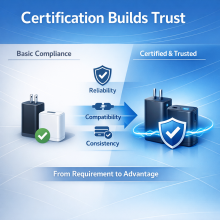
Certification in charging products is evolving from a basic compliance step into a strategic tool. It now helps demonstrate reliability, compatibility, and product credibility, becoming an important factor in how products compete in the market.
time2026/03/30
-
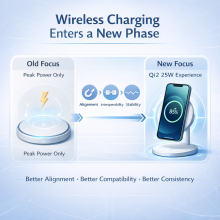
At CES 2026, WPC highlighted Qi2 25W as part of a broader shift in wireless charging. The focus is moving from peak power alone to better alignment, stronger interoperability, and more consistent real-world performance across devices.
time2026/04/08
-
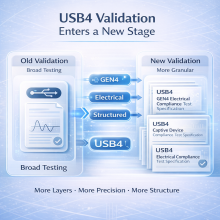
A February 2026 USB-IF update shows that USB4 validation is becoming more detailed and more segmented. With a dedicated GEN4 electrical compliance test specification, the industry is moving toward more structured interface verification and less reliance on broad speed claims alone.
time2026/04/13
-
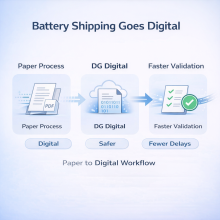
IATA’s launch of DG Digital marks a shift in dangerous goods declarations from paper-heavy handling to digital validation and standardized data exchange. For lithium battery shipments, this means earlier error detection, fewer rejected declarations, and a more efficient compliance workflow.
time2026/04/15